
Speed: Key Factors in Motor Actions
BLOG

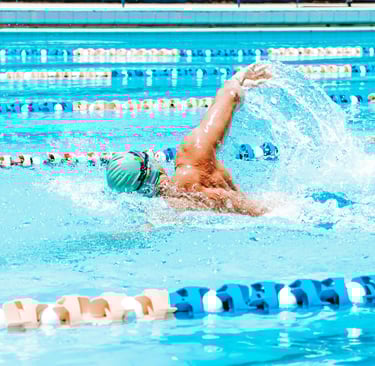
Speed can be defined as the ability to perform motor actions in a short period of time, involving a combination of movement frequency and amplitude. Speed is influenced by several factors, such as muscular strength, flexibility, motor coordination, and the frequency at which the nervous system can send impulses. It is important to note that speed can be measured in different contexts depending on the type of movement performed.
In physical exercise, speed can be developed through specific training methods—such as running, jumping, and throwing drills—that aim to improve the ability to produce force quickly and efficiently. Speed training is essential for athletes across a wide range of sports and also contributes to overall health and quality of life.
Some sports in which speed is a key physical ability include:
Track and Field:
Short-, medium-, and long-distance races, as well as hurdle events, long jump, high jump, shot put, and discus throw.
Swimming:
Events such as 50m, 100m, 200m, and 400m freestyle, as well as relay races.
Cycling:
Speed-focused events like time trials, and sprint events such as points race and elimination race.
Boxing:
A sport that requires fast and precise movements, including dodges, punches, and counterattacks.
Fencing:
A combat sport that demands quick and accurate movements to strike the opponent with the tip of the blade.
Soccer:
Speed is essential for many positions, especially forwards, wingers, and full-backs.
Basketball:
Speed is crucial for quick dribbling, fast breaks, and rapid changes of direction.
Handball:
Speed plays a key role in dribbling and fast runs toward the opponent’s goal.
Tennis:
Speed is fundamental for reaching and returning fast shots on the court.
Rugby:
Speed is important for quick ball movement and fast runs toward the opponent’s goal line.